
United Oil & Gas: Exploration Jamaica—underway!
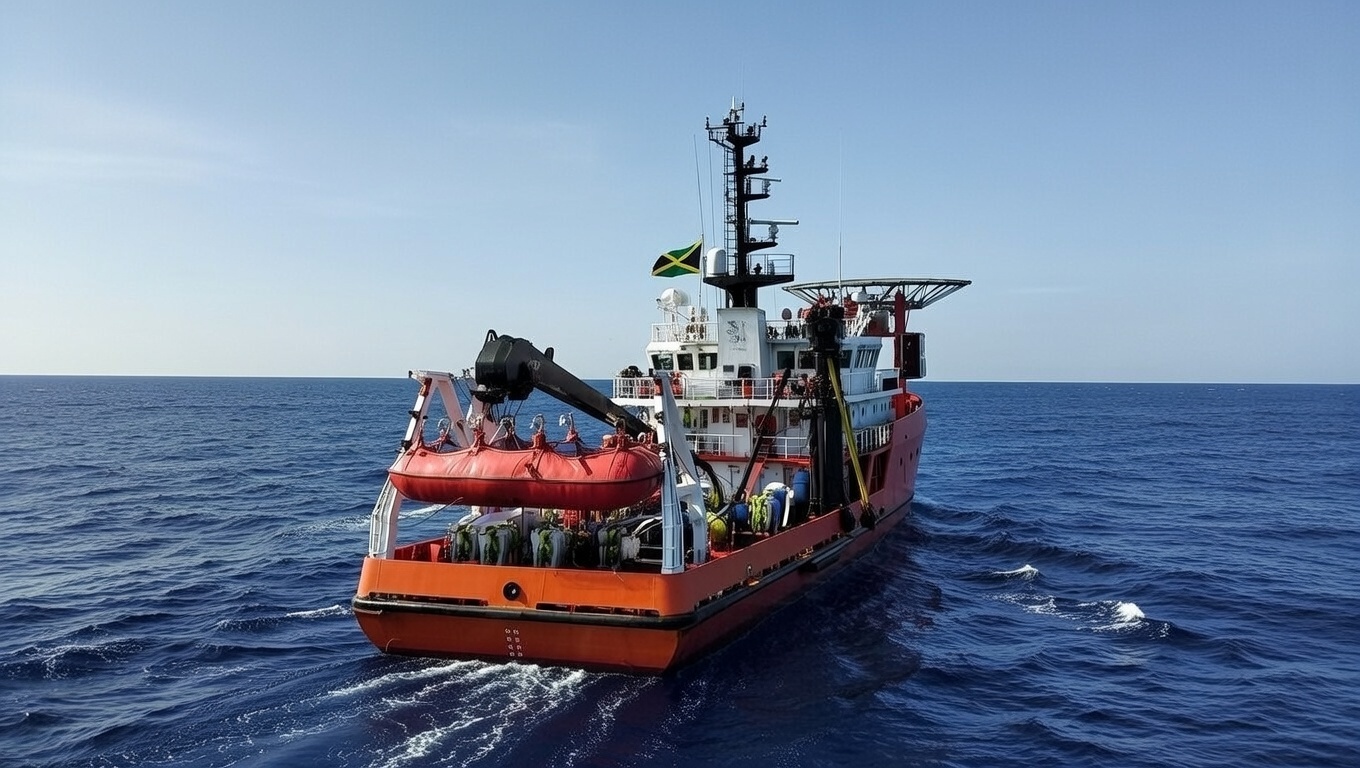
United has commenced its MBES geochemical seabed survey offshore Jamaica with the aim of proving thermogenic hydrocarbons exist at the seabed and thus confirming the presence of an offshore petroleum system for its 7 billion+ barrel license - a potentially huge milestone for the company on success
The long awaited and anticipated MBES survey offshore Jamaica is now underway with the arrival of the R/V Gyre in Kingston, Jamaica—last week.
Unsurprisingly, the work programme has attracted a lot of attention Jamaica side—with the Minister of Science, Energy and Technology, Daryl Vaz meeting with United's CEO, Brain Larkin onboard the survey vessel last week before it commences its 'piston coring programme'.
The aim of the programme will be to test for thermogenic hydrocarbons within the Walton Morant licence—a key step in confirming a working offshore petroleum system.
The Walton Morant License sports a prospective 7 billion+ barrels of oil that would not only be positive for Jamaica who have just battled their way through one of the worst hurricanes the Island has seen in its history but for United Oil & Gas—100% owner of the license.
Multiple Lines of Evidence
The seabed survey aims to build on a progressive set of evidence that indicates there is a high probability of a working petroleum system extending offshore by mapping the seabed in high res, measuring heat flow for hydrocarbon potential and recovering piston core samples for lab analysis.
The MBES survey itself hopes to confirm at the highest level of confidence that the onshore petroleum system does indeed extend offshore and is essentially the final step before securing a potential farm-in partner and exploration drilling.
11 Wells Drilled Historically
11 wells have been drilled historically, as far back as the mid 20th Century and all wells (9 onshore and 2 offshore) confirmed the presence of hydrocarbons.
There are multiple reasons why the license wasn't taken forward at that time including the availability of only 2D seismic, a downturn in the oil price and subsequent capital flight from frontier basins, and the lack of technology used today to be able to confidently map traps, size prospects and gain greater confidence in geology.
That was then, this is Now...
Technology and Data Modelling have moved on leaps and bounds since the last century with the advent of 3D Seismic and vastly improved Satellite Imaging.
United has been quietly amassing technical data including 3D Seismic and analysing satellite imagery that are revealing the potential size and geological nature of multiple prospects within the Walton Morant license. United has cited a prospective 7 billion+ barrel resource with some individual prospects showing the potential of up to 1.1 billion barrels alone.
Satellite seep analysis over a period of time, provides further evidence and has revealed a number of anomalies, one within the recently shot 3D Seismic area.
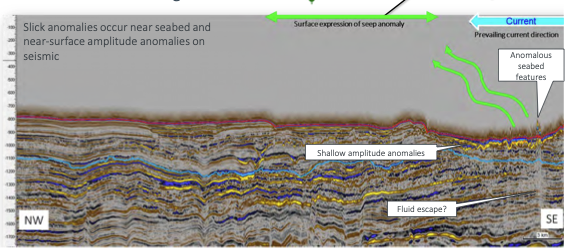
3D seismic data
Piston Coring
Along with mapping the seabed in high res, measuring heat flow for hydrocarbon potential, the piston core survey will collect 40-60 seabed sediment samples with the aim of confirming the presence of hydrocarbons at the seabed. A successful drop core survey will prove the presence of an active petroleum system and materially reduce the geological risks thus increasing the chance of success in the various exploration scenarios.
In fact, a successful survey would move one of United's key targets, Colbri from a one in five (19%) to one in three (32%) chance of success—a significant increase and high chance of success for frontier exploration.
Due to the nature of the survey, initial results could be available in weeks with final analysis expected in a few months.
Not only would a successful outcome result in a signifcant uplift in chance of success and should reflect materially in the company's share price, it will surely impact positively on discussions with United's potential farm-in partners of whom there are a number already in the data room. Securing a farm-in partner would be a transformational moment for the company and its investors and should bring a new frontier exploration drill programme to the London market of the potential size we've not seen for a while.
If you want to here more about the compelling evidence to date and how the piston coring significantly enhances the overall risk profile of United's Walton Morant license, have a listen to United's Geo-Science advisor Paul Ryan and United's Business Development Manager, Donal Meehan