
United Oil & Gas Steps Up Jamaica Drilling Readiness as Farm-Out Push Builds Momentum
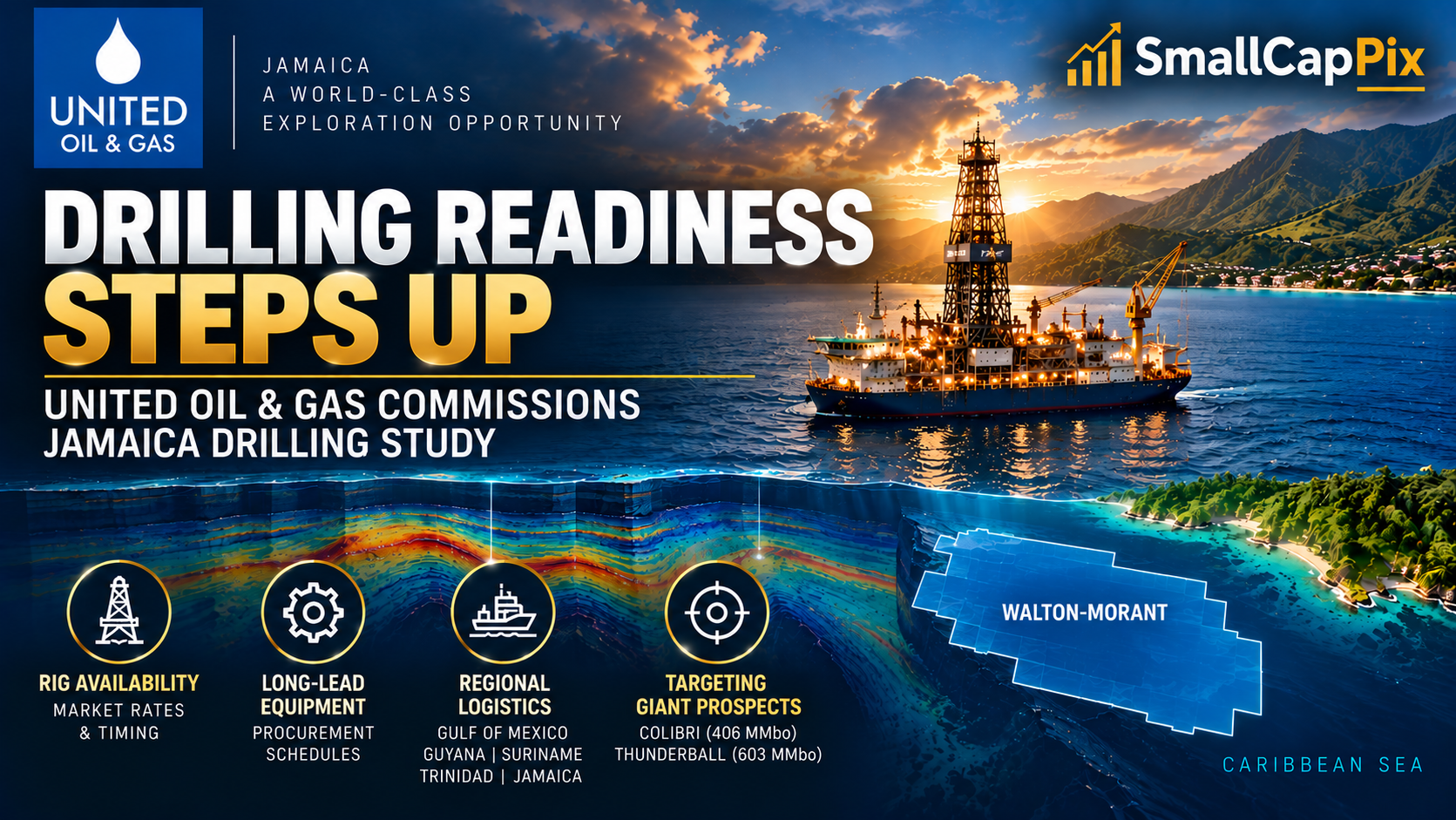
United Oil & Gas has taken another tangible step towards the drill bit in Jamaica, commissioning an independent study into rig availability, drilling costs, long-lead equipment and regional logistics. Coming just days after strengthening its management team with a new COO, the work will focus on the giant Colibri and Thunderball opportunities and provide current operational data to support United as it pushes to conclude the Walton-Morant farm-out.
The direction of travel at United Oil & Gas (AIM: UOG) is becoming increasingly interesting.
Only days after appointing Donal Meehan as Chief Operating Officer with an immediate focus on advancing the Jamaican farm-out and ensuring operational readiness, United has commissioned NRG Well Management to undertake a drilling rig and long-lead availability study for its Walton-Morant Licence.
This isn't a commitment to drill.
But it is the sort of detailed preparatory work that needs to happen if an exploration programme is ultimately going to move from seismic screens and geological models towards an actual well.
And importantly for shareholders, United says the information will also support its ongoing farm-out discussions.
What Is United Actually Doing?
NRG will go directly into the international drilling market and establish what would be required to drill United's prospects offshore Jamaica.
The work includes assessing suitable rigs, their availability, indicative day rates and mobilisation requirements.
It will also examine procurement timelines for long-lead drilling equipment and critical well services, together with the logistics infrastructure that could support a Jamaican drilling campaign.
That extends beyond Jamaica itself.
NRG will assess supply-chain and logistical support across established regional energy centres including the Gulf of Mexico, Guyana, Suriname and Trinidad, as well as evaluating Jamaican port readiness.
In other words, United is beginning to establish the practical answers to some fairly important questions:
What rig could drill the prospects? When could it be available? What might it cost? What needs ordering in advance? And how would the operation actually be supported?
Those answers could be particularly useful when sitting across the table from potential farm-in partners.
Two Huge Targets Move Into Focus
The study will initially concentrate on two very different drilling opportunities.
- Colibri — 406 MMbo mean prospective resources
Colibri lies in approximately 750 metres of water and is one of the principal prospects within Walton-Morant.
- Thunderball — 603 MMbo mean prospective resources
Thunderball is a deeper-water opportunity at approximately 1,900 metres water depth.
Together they contain more than one billion barrels of mean prospective resources.
That's within a much larger Walton-Morant prospect and lead inventory containing more than 7 billion barrels of prospective resource potential.
These remain prospective resources, of course — they are not discoveries or reserves, and only drilling can determine whether commercial hydrocarbons are actually present.
But that is precisely why today's announcement matters.
United is starting to examine what would be required to test them.
Why This Could Matter to the Farm-Out
For SmallCapPix, this is arguably the most interesting aspect of today's news.
United explicitly says the study will provide “current market-based operational planning data” to inform its ongoing farm-out discussions.
Think about the proposition from the perspective of a potential partner.
A prospective farminee isn't only interested in geological upside. It needs to understand the practical and financial implications of drilling.
Rig availability and suitability matter.
Mobilisation costs matter.
Day rates matter.
Long-lead equipment matters.
Regional supply chains matter.
And the timetable required to put all those components together matters.
By commissioning NRG now, United should be able to present potential partners with a considerably more developed operational picture of what a Jamaican exploration programme could involve—that's another layer of uncertainty potentially being removed from the proposition.
From Building the Geological Case to Preparing for a Well
Substantial work has already been completed across Walton-Morant.
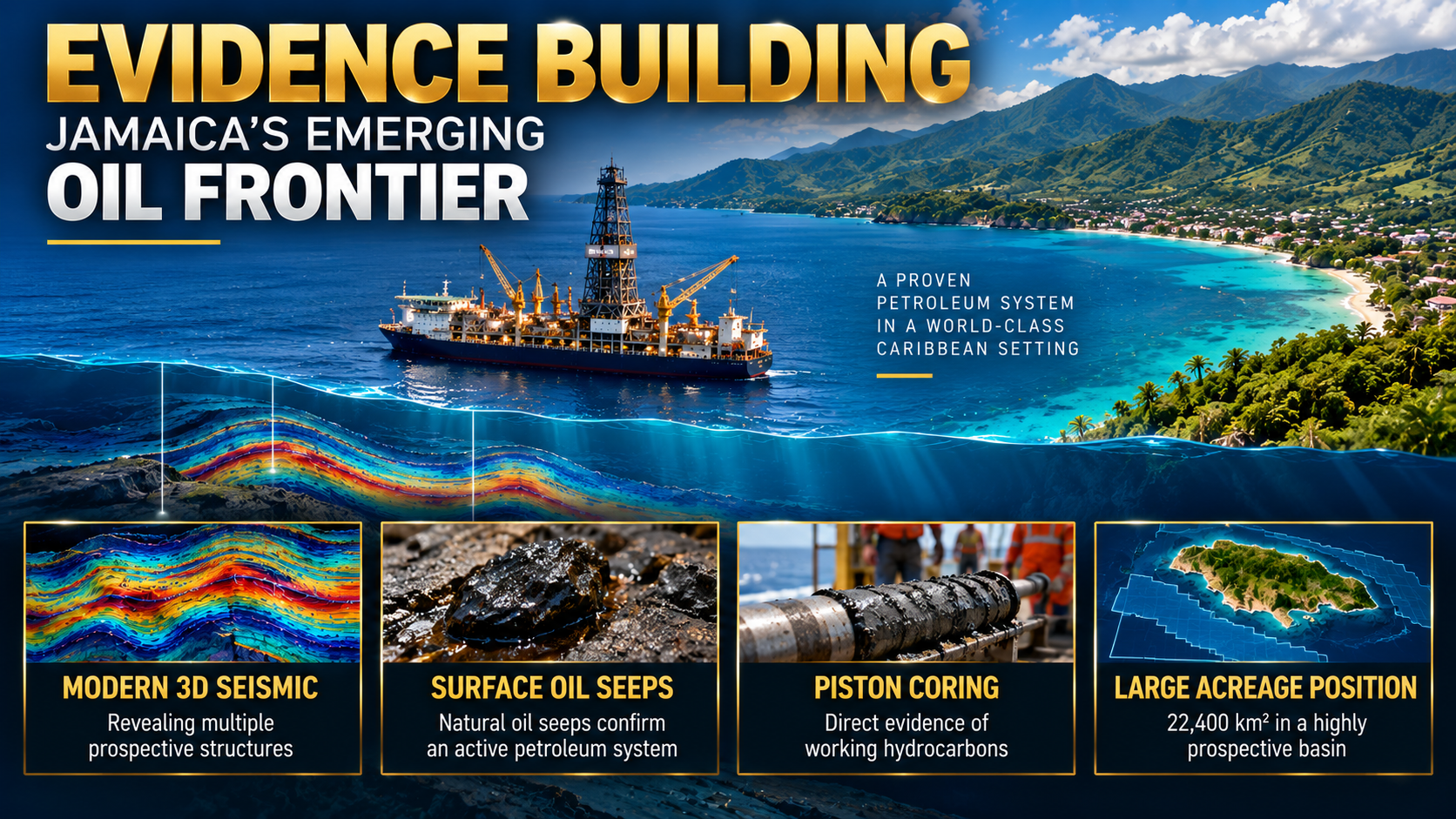
United has approximately 2,250km² of 3D seismic across the licence and has identified a large portfolio of prospects and leads.
More recently, the company completed its offshore piston-coring programme, adding another piece to the petroleum-system evidence.
Analysis of selected samples identified C4 and C5 hydrocarbons — butanes and pentanes — consistent with a potential thermogenic contribution.
Put that alongside historical hydrocarbon shows, reported oil seeps and slicks, seismic interpretation and the wider geological work, and United has progressively assembled the technical case it can present to prospective partners.
The next major question has always been how Walton-Morant gets to the drill bit.
Today's announcement begins addressing the operational side of that question.
And We Won't Have Long to Wait for the Results
Another useful detail is the timetable.
United expects NRG's work to be completed within the coming weeks, after which it intends to update shareholders on the findings.
That could provide investors with considerably more visibility over the practical requirements of drilling Colibri, Thunderball or comparable targets.
It may also give the market its first current indication of rig availability, commercial conditions and procurement timelines relevant to a potential Jamaican campaign.
Crucially, however, United makes clear that commissioning the study does not represent a commitment to drill.
Any eventual programme remains dependent on factors including commercial agreements and Jamaican Government regulatory approvals.
Why Jamaica Remains Such a High-Impact Opportunity
The attraction of Walton-Morant ultimately comes back to scale.
United controls a huge offshore exploration position containing more than 7 billion barrels of mean prospective resource potential, yet the acreage remains substantially underexplored by modern standards.
Colibri alone carries 406 MMbo of mean prospective resources.
Thunderball adds another 603 MMbo.
For a small AIM-listed company, successfully bringing a well-funded industry partner into an opportunity of that magnitude could materially alter the investment proposition.
A farm-out could potentially provide not only capital but technical validation, operational expertise and, most importantly, a credible route towards drilling.
And drilling remains the ultimate value inflection point.
The SmallCapPix Take
We think today's announcement is more significant than simply commissioning another technical study.
There is an emerging sequence to United's recent Jamaica news.
The company has spent considerable time building the geological case. It has added new geochemical evidence. It is actively pursuing a farm-out. It has strengthened its management team with a COO whose immediate focus includes that transaction and operational readiness.
Now it is asking an independent well-management specialist to establish the rigs, costs, equipment, procurement schedules and logistics required to actually drill the prospects.
That looks like progression.
It is important not to get ahead of the facts. United has not committed to drilling Colibri or Thunderball, and today's announcement does not tell us that a farm-out agreement is imminent.
But companies don't reach a drill bit simply by identifying a prospect. There is an enormous amount of commercial, technical and logistical preparation required beforehand.
United is now doing more of that preparation.
And there could be a commercial benefit to doing it before concluding the farm-out: a prospective partner can evaluate Walton-Morant with a clearer understanding of the current rig market, likely procurement timetable, logistics and practical pathway towards a well.
With Colibri and Thunderball alone offering more than one billion barrels of combined mean prospective resources, the potential prize is substantial.
The next few weeks should now deliver the NRG study findings.
But the really important catalyst remains the same:
Can United convert growing technical evidence, increasing operational readiness and an active partnering process into a farm-out that finally puts Jamaica on a credible path towards the drill bit?
Today's news suggests it is doing the groundwork to be ready if the answer is yes.